Difference between revisions of "TeleVideo 910"
m (images) |
(Add images) |
||
| Line 63: | Line 63: | ||
File:TeleVideo 910 121389889462-5.jpg | File:TeleVideo 910 121389889462-5.jpg | ||
File:TeleVideo 910 121389889462-6.jpg | File:TeleVideo 910 121389889462-6.jpg | ||
| + | File:TeleVideo 910 221610770079-1.jpg | ||
| + | File:TeleVideo 910 221610770079-2.jpg | ||
| + | File:TeleVideo 910 221610770079-3.jpg | ||
| + | File:TeleVideo 910 221610770079-4.jpg | ||
| + | File:TeleVideo 910 221610770079-5.jpg | ||
| + | File:TeleVideo 910 221610770079-6.jpg | ||
| + | File:TeleVideo 910 221610770079-7.jpg | ||
| + | File:TeleVideo 910 221610770079-8.jpg | ||
| + | File:TeleVideo 910 221610770079-9.jpg | ||
| + | File:TeleVideo 910 221610770079-10.jpg | ||
| + | File:TeleVideo 910 221610770079-11.jpg | ||
</gallery> | </gallery> | ||
Revision as of 17:45, 24 November 2014
| TeleVideo 910 | |
|---|---|
 | |
| Manufacturer | TeleVideo |
| Model | 910 |
| Lifetime | |
| Introduced | May, 1981 |
| Introductory Price | $699 |
| Communication | |
| Interfaces |
RS-232C, 20 mA current loop |
| Baud Rates | 50, 75, 110, 135, 150, 300, 600, 1200, 1800, 2400, 3600, 4800, 7200, 9600, 19200 |
| Display | |
| Size | 12-inch |
| Phosphor | P4 |
| Character Modes | |
| Resolution | 80x24 |
| Matrix | 7x8 |
| Cell | 8x10 |
| Firmware | |
| Personalities |
ADDS Viewpoint 25, Hazeltine 1410, Lear Siegler ADM-3A, Lear Siegler ADM-5 |
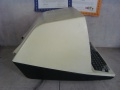
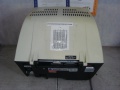
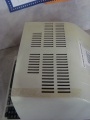
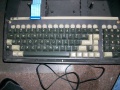
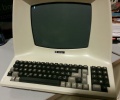
The TeleVideo 910 terminal was introduced in May, 1981[1] at a price of $699.[2]
Features:
- four switchable character fonts
- five independently controlled video attributes
- uses the same case and keyboard as the TeleVideo 912 and TeleVideo 920
Manx
- TeleVideo Model 910 Operator's Manual, May, 1981
- Model 910 Plus Terminal Operators Manual, February, 1982
- Model 910 Installation & User's Guide
- Model 910/910 Plus Maintenance Manual
- Model 910 Plus Installation & User's Guide
- Terminal Maintenance Training Manual
Images


Advertisement











References
- ↑ TeleVideo advertisement, Computerworld, May 18, 1981, pg. 67
- ↑ "NCC Mingles Micros, Minis and Mainframes", Thom Hogan, InfoWorld, June 22, 1981, pg. 40

