Difference between revisions of "Template:Infobox terminal/testcases/Beehive B100"
m (Organize failing infoboxes as bullet lsit) |
m (Update test case headers) |
||
| Line 39: | Line 39: | ||
| intro_prior = true | | intro_prior = true | ||
| intro_month = January | | intro_month = January | ||
| − | |||
| − | |||
| − | |||
| − | |||
| − | |||
| − | |||
| − | |||
}} | }} | ||
* intro_month value is not a month name | * intro_month value is not a month name | ||
| Line 58: | Line 51: | ||
| manufacturer = Beehive | | manufacturer = Beehive | ||
| model = B100 | | model = B100 | ||
| − | |||
| − | |||
}} | }} | ||
* discontinued_month specified, but no discontinued_year specified | * discontinued_month specified, but no discontinued_year specified | ||
| Line 65: | Line 56: | ||
| manufacturer = Beehive | | manufacturer = Beehive | ||
| model = B100 | | model = B100 | ||
| − | | | + | }} |
| + | |||
| + | {{Infobox terminal | ||
| + | | manufacturer = Beehive | ||
| + | | model = B100 | ||
| + | | intro_month = jAnUaRY | ||
| + | | intro_year = 1980 | ||
}} | }} | ||
Revision as of 04:40, 25 March 2012
 |
This is the template test case page for the sandbox of Template:Infobox terminal/testcases. to update the examples. If there are many examples of a complicated template, later ones may break due to limits in MediaWiki, see the HTML comment "NewPP limit report" in the rendered page. You can also use Special:ExpandTemplates to examine the results of template uses. You can test how this page looks in the different skins with these links: |
- required manufacturer, model missing
- Missing required
manufacturerargument!
- Missing required
- required model missing
- Missing required
modelargument!
- Missing required
- required model doesn't match page name
- Page name "Beehive B100" doesn't match manufacturer model "Beehive B200"!
- required manufacturer doesn't match page name
- Page name "Beehive B100" doesn't match manufacturer model "Beehoove B100"!
- required manufacturer doesn't match page name
- Page name "Beehive B100" doesn't match manufacturer model "Beehoove terminal"!
- intro_prior specified, but no intro_year specified
- Missing required
intro_yearargument forintro_priorargument!
- Missing required
- intro_month specified, but no intro_year specified
- Missing required
intro_yearargument forintro_monthargument!
- Missing required
- intro_prior, intro_month specified, but no intro_year specified
- Missing required
intro_yearargument forintro_priorargument!
- Missing required
- intro_month value is not a month name
- Invalid month specification "Frob" for
intro_monthargument!
- Invalid month specification "Frob" for
- discontinued_month value is not a month name
Beehive B100 Manufacturer Beehive Model B100 Firmware Code Chart Beehive B100 - discontinued_month specified, but no discontinued_year specified
Beehive B100 Manufacturer Beehive Model B100 Firmware Code Chart Beehive B100 Beehive B100 Manufacturer Beehive Model B100 Lifetime Introduced January, 1980 Firmware Code Chart Beehive B100 Beehive B100 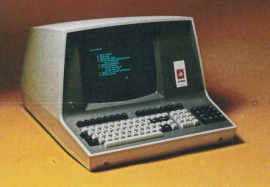
Manufacturer Beehive Model B100 Lifetime Introduced prior to July, 1976 Introductory Price $1,495 Discontinued December, 1980 Communication Interfaces RS-232C,
20mA current loop,
TTLBaud Rates 75, 110, 150, 300, 600, 1000, 1200, 1800, 2000, 2400, 3600, 4800, 7200, 9600, 19200 Display Size 12-inch Phosphors P14 white, amber, green Refresh Rates 50 Hz, 60 Hz Character Modes Resolutions 40x12, 40x24, 80x12, 80x24 Matrix 5x7 Firmware Personalities DEC VT52,
DEC VT100,
DEC VT220,
DEC VT320Code Chart Beehive B100 Software Libraries Terminfo Name b100 The Teletype Corporation had its roots in the Morkrum Company. In 1902, electrical engineer Mr. Frank Pearne approached Mr. Joy Morton, head of Morton Salt, seeking a sponsor for Pearne's research into the practicalities of developing a printing telegraph system. Joy Morton needed to determine whether this was worthwhile and so consulted mechanical engineer Charles Krum, who was vice president of the Western Cold Storage Company, which was run by Morton’s brother Mark Morton. Krum was interested in helping Pearne, so space was set up in a laboratory in the attic of Western Cold Storage. Frank Pearne lost interest in the project after a year and left to get involved in teaching. Krum was prepared to continue Pearne’s work, and in August, 1903 a patent was filed for a ‘typebar page printer’. In 1904, Krum filed a patent for a ‘type wheel printing telegraph machine’ which was issued in August, 1907.
In 1906, the Morkrum Company was formed with the company name combining the Morton and Krum names and reflects the financial assistance provided by Joy Morton. This is the time when Charles Krum's son, Howard Krum, joined his father in this work. It was Howard who developed and patented the start-stop synchronizing method for code telegraph systems, which made possible the practical teleprinter.
In 1908, a working teleprinter was produced, called the Morkrum Printing Telegraph, which was field tested with the Alton Railroad.
In 1910, the Morkrum Company designed and installed the first commercial teletypewriter system on Postal Telegraph Company lines between Boston and New York City using the "Blue Code Version" of the Morkrum Printing Telegraph.
In 1925 the Morkrum Company and the Kleinschmidt Electric Company merged to form the Morkrum-Kleinschmidt Company. In December 1928, the company changed its name to the less cumbersome "Teletype Corporation".
In 1930, the Teletype Corporation was purchased by the American Telephone and Telegraph Company for $30,000,000 in stock and became a subsidiary of the Western Electric Company. While other principals in the Teletype Corporation retired, Howard Krum stayed on as a consultant.
The Teletype Corporation had its roots in the Morkrum Company. In 1902, electrical engineer Mr. Frank Pearne approached Mr. Joy Morton, head of Morton Salt, seeking a sponsor for Pearne's research into the practicalities of developing a printing telegraph system. Joy Morton needed to determine whether this was worthwhile and so consulted mechanical engineer Charles Krum, who was vice president of the Western Cold Storage Company, which was run by Morton’s brother Mark Morton. Krum was interested in helping Pearne, so space was set up in a laboratory in the attic of Western Cold Storage. Frank Pearne lost interest in the project after a year and left to get involved in teaching. Krum was prepared to continue Pearne’s work, and in August, 1903 a patent was filed for a ‘typebar page printer’. In 1904, Krum filed a patent for a ‘type wheel printing telegraph machine’ which was issued in August, 1907.
In 1906, the Morkrum Company was formed with the company name combining the Morton and Krum names and reflects the financial assistance provided by Joy Morton. This is the time when Charles Krum's son, Howard Krum, joined his father in this work. It was Howard who developed and patented the start-stop synchronizing method for code telegraph systems, which made possible the practical teleprinter.
In 1908, a working teleprinter was produced, called the Morkrum Printing Telegraph, which was field tested with the Alton Railroad.
In 1910, the Morkrum Company designed and installed the first commercial teletypewriter system on Postal Telegraph Company lines between Boston and New York City using the "Blue Code Version" of the Morkrum Printing Telegraph.
In 1925 the Morkrum Company and the Kleinschmidt Electric Company merged to form the Morkrum-Kleinschmidt Company. In December 1928, the company changed its name to the less cumbersome "Teletype Corporation".
In 1930, the Teletype Corporation was purchased by the American Telephone and Telegraph Company for $30,000,000 in stock and became a subsidiary of the Western Electric Company. While other principals in the Teletype Corporation retired, Howard Krum stayed on as a consultant.
The Teletype Corporation had its roots in the Morkrum Company. In 1902, electrical engineer Mr. Frank Pearne approached Mr. Joy Morton, head of Morton Salt, seeking a sponsor for Pearne's research into the practicalities of developing a printing telegraph system. Joy Morton needed to determine whether this was worthwhile and so consulted mechanical engineer Charles Krum, who was vice president of the Western Cold Storage Company, which was run by Morton’s brother Mark Morton. Krum was interested in helping Pearne, so space was set up in a laboratory in the attic of Western Cold Storage. Frank Pearne lost interest in the project after a year and left to get involved in teaching. Krum was prepared to continue Pearne’s work, and in August, 1903 a patent was filed for a ‘typebar page printer’. In 1904, Krum filed a patent for a ‘type wheel printing telegraph machine’ which was issued in August, 1907.
In 1906, the Morkrum Company was formed with the company name combining the Morton and Krum names and reflects the financial assistance provided by Joy Morton. This is the time when Charles Krum's son, Howard Krum, joined his father in this work. It was Howard who developed and patented the start-stop synchronizing method for code telegraph systems, which made possible the practical teleprinter.
In 1908, a working teleprinter was produced, called the Morkrum Printing Telegraph, which was field tested with the Alton Railroad.
In 1910, the Morkrum Company designed and installed the first commercial teletypewriter system on Postal Telegraph Company lines between Boston and New York City using the "Blue Code Version" of the Morkrum Printing Telegraph.
In 1925 the Morkrum Company and the Kleinschmidt Electric Company merged to form the Morkrum-Kleinschmidt Company. In December 1928, the company changed its name to the less cumbersome "Teletype Corporation".
In 1930, the Teletype Corporation was purchased by the American Telephone and Telegraph Company for $30,000,000 in stock and became a subsidiary of the Western Electric Company. While other principals in the Teletype Corporation retired, Howard Krum stayed on as a consultant.
The Teletype Corporation had its roots in the Morkrum Company. In 1902, electrical engineer Mr. Frank Pearne approached Mr. Joy Morton, head of Morton Salt, seeking a sponsor for Pearne's research into the practicalities of developing a printing telegraph system. Joy Morton needed to determine whether this was worthwhile and so consulted mechanical engineer Charles Krum, who was vice president of the Western Cold Storage Company, which was run by Morton’s brother Mark Morton. Krum was interested in helping Pearne, so space was set up in a laboratory in the attic of Western Cold Storage. Frank Pearne lost interest in the project after a year and left to get involved in teaching. Krum was prepared to continue Pearne’s work, and in August, 1903 a patent was filed for a ‘typebar page printer’. In 1904, Krum filed a patent for a ‘type wheel printing telegraph machine’ which was issued in August, 1907.
In 1906, the Morkrum Company was formed with the company name combining the Morton and Krum names and reflects the financial assistance provided by Joy Morton. This is the time when Charles Krum's son, Howard Krum, joined his father in this work. It was Howard who developed and patented the start-stop synchronizing method for code telegraph systems, which made possible the practical teleprinter.
In 1908, a working teleprinter was produced, called the Morkrum Printing Telegraph, which was field tested with the Alton Railroad.
In 1910, the Morkrum Company designed and installed the first commercial teletypewriter system on Postal Telegraph Company lines between Boston and New York City using the "Blue Code Version" of the Morkrum Printing Telegraph.
In 1925 the Morkrum Company and the Kleinschmidt Electric Company merged to form the Morkrum-Kleinschmidt Company. In December 1928, the company changed its name to the less cumbersome "Teletype Corporation".
In 1930, the Teletype Corporation was purchased by the American Telephone and Telegraph Company for $30,000,000 in stock and became a subsidiary of the Western Electric Company. While other principals in the Teletype Corporation retired, Howard Krum stayed on as a consultant.
- discontinued_month specified, but no discontinued_year specified


