Difference between revisions of "Beehive B500"
m (references) |
m (images) |
||
| Line 43: | Line 43: | ||
* scrolling | * scrolling | ||
* 8 video levels | * 8 video levels | ||
| + | |||
| + | ==Images== | ||
| + | <gallery> | ||
| + | File:Beehive_B_series_advertisement_Computerworld_25Oct1976.jpg|Advertisement | ||
| + | </gallery> | ||
{{References}} | {{References}} | ||
Revision as of 19:32, 15 February 2014
| Beehive B500 | |
|---|---|
 | |
| Manufacturer | Beehive |
| Model | B500 |
| Lifetime | |
| Introduced | June, 1976 |
| Introductory Price | $2,695 |
| Communication | |
| Baud Rates | 19200 |
| Character Modes | |
| Resolution | 80x25 |
| Firmware | |
| CPU | Intel 8080A |
| RAM | 4 K |
The Beehive B500 terminal was introduced in June, 1976 at a price of $2,695.[1]
- program memory: up to 4K PROM or 7K ROM, up to 48K RAM
- user defined function keys
- upload and download capability
- addressable cursor
- keystroke programming
- format mode (protected and unprotected)
- editing capability
- tabbing (forward and back)
- auxiliary I/O port
- optional programmable character generator
- full and half duplex operation
- scrolling
- 8 video levels
Images
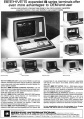
Advertisement

References
- ↑ "Few Products Announced for Large System Users", Computerworld, June 14, 1976, pg. 4
- ↑ Beehive advertisement, Computerworld, October 25, 1976, pg. 31
- ↑ Beehive advertisement, Computerworld, July 25, 1977, pg. 22

