Difference between revisions of "Courier Executerm 60"
m (manx, infobox) |
m (update from chatgpt) |
||
| (3 intermediate revisions by the same user not shown) | |||
| Line 3: | Line 3: | ||
| model = Executerm 60 | | model = Executerm 60 | ||
| image = Courier_Executerm_60.jpg | | image = Courier_Executerm_60.jpg | ||
| − | | intro_month = | + | | intro_month = April |
| intro_year = 1970 | | intro_year = 1970 | ||
| − | | | + | | intro_price = $5,150 |
| discontinued_year = | | discontinued_year = | ||
| discontinued_month = | | discontinued_month = | ||
| − | | interface = | + | | interface = RS-232C |
| interface2 = | | interface2 = | ||
| interface3 = | | interface3 = | ||
| − | | baud_rates = 1200 | + | | baud_rates = 1200, 2400 |
| display_size = | | display_size = | ||
| phosphor = | | phosphor = | ||
| Line 18: | Line 18: | ||
| refresh_rate = | | refresh_rate = | ||
| refresh_rate2 = | | refresh_rate2 = | ||
| − | | char_resolution = | + | | char_resolution = 40x6 |
| − | | char_resolution2 = | + | | char_resolution2 = 40x12 |
| − | | char_resolution3 = | + | | char_resolution3 = |
| − | | char_resolution4 = | + | | char_resolution4 = |
| status_line = | | status_line = | ||
| char_matrix = 7x8 | | char_matrix = 7x8 | ||
| char_cell = | | char_cell = | ||
| + | | attributes = normal | ||
| graphic_type = | | graphic_type = | ||
| graphic_resolution = | | graphic_resolution = | ||
| Line 32: | Line 33: | ||
| personality1 = IBM 2260 | | personality1 = IBM 2260 | ||
| personality2 = IBM 2265 | | personality2 = IBM 2265 | ||
| − | | personality3 = | + | | personality3 = |
| personality4 = | | personality4 = | ||
| personality5 = | | personality5 = | ||
| Line 39: | Line 40: | ||
| terminfo = | | terminfo = | ||
}} | }} | ||
| − | The {{PAGENAME}} was | + | |
| + | The {{PAGENAME}} was an alphanumeric CRT display terminal produced by | ||
| + | Courier Terminal Systems. Introduced around 1970, it was marketed as | ||
| + | a plug-compatible replacement for the [[IBM 2260]] and [[IBM 2265]] | ||
| + | display stations used with IBM System/360 teleprocessing systems. | ||
| + | |||
| + | Courier advertised the terminal as compatible with IBM host | ||
| + | environments including OS, DOS, BTAM and OTAM. The terminal | ||
| + | implemented the addressing and display conventions used by IBM 2260 | ||
| + | class terminals, allowing it to operate with existing IBM host | ||
| + | software while providing a lower acquisition cost than IBM hardware. | ||
| + | {{Computerworld | ||
| + | | name=Courier1971Ad | ||
| id=wCl2yLDv2bAC | | id=wCl2yLDv2bAC | ||
| pg=36 | | pg=36 | ||
| Line 46: | Line 59: | ||
| date =November 17, 1971 | | date =November 17, 1971 | ||
}} | }} | ||
| + | |||
| + | ==Description== | ||
| + | |||
| + | The Executerm 60 used a raster-scan CRT display and supported several | ||
| + | screen formats. Available capacities included 240 characters | ||
| + | (40 columns by 6 rows) and 480 characters (40 by 12). Characters | ||
| + | were generated using a 7x8 dot matrix. <ref name="Datamation1970">{{citation | ||
| + | | url=https://bitsavers.org/magazines/Datamation/197004.pdf | ||
| + | | title=The IBM Compatible Executerm 60 | ||
| + | | work=Datamation | ||
| + | | volume = 16 | ||
| + | | number = 4 | ||
| + | | date=April 1970 | ||
| + | | accessdate=March 9, 2026 | ||
| + | }}</ref> | ||
| + | |||
| + | The terminal supported asynchronous communication using an RS-232C | ||
| + | interface with selectable speeds ranging from approximately 1200 to | ||
| + | 4800 baud depending on configuration. <ref name="Datamation1970" /> | ||
| + | |||
| + | Courier offered optional clustering capability through a | ||
| + | Multi-Station Adapter (MSA). This device allowed several terminals | ||
| + | and printers to share a single communications line, with as many as | ||
| + | sixteen devices connected in a cluster configuration. | ||
| + | <ref name="Datamation1970" /> | ||
| + | |||
| + | ==Context== | ||
| + | |||
| + | During the early 1970s a number of manufacturers produced terminals | ||
| + | designed to interoperate with IBM teleprocessing equipment. The | ||
| + | Executerm 60 was part of this class of IBM-compatible display | ||
| + | terminals intended for remote job entry, time-sharing access, and | ||
| + | interactive data entry in large computer installations. <ref name="ModernData1970">{{citation | ||
| + | | url=https://bitsavers.computerhistory.org/magazines/Modern_Data/Modern_Data_1970_06.pdf | ||
| + | | title=Alphanumeric CRT terminals survey | ||
| + | | work=Modern Data | ||
| + | | volume = 3 | ||
| + | | number = 6 | ||
| + | | date=June 1970 | ||
| + | | accessdate=March 9, 2026 | ||
| + | }}</ref> | ||
| + | |||
| + | Courier Terminal Systems marketed the Executerm line as a family of | ||
| + | display terminals intended for different host environments. While the | ||
| + | Executerm 60 focused on compatibility with IBM 2260 style display | ||
| + | stations, other Executerm models were promoted for use with | ||
| + | time-sharing systems and non-IBM hosts. <ref name="Datamation1970" /> | ||
==[[Manx]]== | ==[[Manx]]== | ||
| Line 61: | Line 121: | ||
[[Category:Upper Case]] | [[Category:Upper Case]] | ||
{{category raster}} | {{category raster}} | ||
| − | [[Category: | + | [[Category:1970]] |
Latest revision as of 22:15, 9 March 2026
| Courier Executerm 60 | |
|---|---|
 | |
| Manufacturer | Courier |
| Model | Executerm 60 |
| Lifetime | |
| Introduced | April, 1970 |
| Introductory Price | $5,150 |
| Communication | |
| Interface | RS-232C |
| Baud Rates | 1200, 2400 |
| Character Modes | |
| Resolutions | 40x6, 40x12 |
| Attributes | Normal |
| Matrix | 7x8 |
| Firmware | |
| Personalities |
IBM 2260, IBM 2265 |
The Courier Executerm 60 was an alphanumeric CRT display terminal produced by Courier Terminal Systems. Introduced around 1970, it was marketed as a plug-compatible replacement for the IBM 2260 and IBM 2265 display stations used with IBM System/360 teleprocessing systems.
Courier advertised the terminal as compatible with IBM host environments including OS, DOS, BTAM and OTAM. The terminal implemented the addressing and display conventions used by IBM 2260 class terminals, allowing it to operate with existing IBM host software while providing a lower acquisition cost than IBM hardware. [1]
Contents
Description
The Executerm 60 used a raster-scan CRT display and supported several screen formats. Available capacities included 240 characters (40 columns by 6 rows) and 480 characters (40 by 12). Characters were generated using a 7x8 dot matrix. [2]
The terminal supported asynchronous communication using an RS-232C interface with selectable speeds ranging from approximately 1200 to 4800 baud depending on configuration. [2]
Courier offered optional clustering capability through a Multi-Station Adapter (MSA). This device allowed several terminals and printers to share a single communications line, with as many as sixteen devices connected in a cluster configuration. [2]
Context
During the early 1970s a number of manufacturers produced terminals designed to interoperate with IBM teleprocessing equipment. The Executerm 60 was part of this class of IBM-compatible display terminals intended for remote job entry, time-sharing access, and interactive data entry in large computer installations. [3]
Courier Terminal Systems marketed the Executerm line as a family of display terminals intended for different host environments. While the Executerm 60 focused on compatibility with IBM 2260 style display stations, other Executerm models were promoted for use with time-sharing systems and non-IBM hosts. [2]
Manx
- Alphanumeric Display Terminals - Basic Characteristics, August, 1976
Images
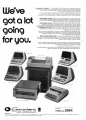
Advertisement
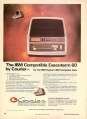
Datamation April 1970


References
- ↑ Courier Terminal Systems advertisement, Computerworld, November 17, 1971, pg. 36
- ↑ 2.0 2.1 2.2 2.3 "The IBM Compatible Executerm 60", Datamation 16 (4), April 1970, https://bitsavers.org/magazines/Datamation/197004.pdf, retrieved March 9, 2026
- ↑ "Alphanumeric CRT terminals survey", Modern Data 3 (6), June 1970, https://bitsavers.computerhistory.org/magazines/Modern_Data/Modern_Data_1970_06.pdf, retrieved March 9, 2026

